
Mirror, mirror: when metrics tell leaders what they want to hear

The power and danger of customer-experience targets
Most property businesses say that customers matter. Far fewer make customer experience part of the way leaders, employees and service partners are assessed and rewarded.
That is a missed opportunity. When thoughtfully designed, customer-experience targets can turn a broad aspiration—“put the customer first”—into a practical organisational priority. They can encourage leaders to invest in service, give frontline teams a stronger voice and make everyone accountable for the experience delivered to occupiers, residents and visitors.
But there is a danger. The moment a customer measure becomes linked to pay, bonuses, promotion or contract renewal, people acquire a powerful incentive to influence the number as well as the experience behind it.
The question is therefore not whether customer experience should be measured and rewarded. It should. The question is how to do so without corrupting the evidence on which the reward is based.
Targets reveal what really matters
Employees quickly learn which corporate messages are genuine. If leaders talk about customers but reward only revenue, profit and cost reduction, the financial measures will usually win.
Including customer experience in performance assessments sends a different message. It says that how results are achieved matters alongside the results themselves.
Well-designed targets can:
• Focus leaders’ attention on the causes of dissatisfaction.
• Encourage cooperation between asset management, property management, facilities management and leasing teams.
• Connect frontline behaviour with organisational purpose.
• Give employees permission to challenge processes that make customers’ lives difficult.
• Balance short-term financial pressures with the long-term value of loyalty and retention.
• Make outsourced service providers accountable for the experience they help create.
The key is alignment. A customer target should promote better experiences, not simply produce a higher score.
What good practice looks like in real estate
Real-estate companies in several markets are beginning to treat customer experience as a strategic performance measure.
GPE: independent evidence linked to organisational incentives
GPE uses an annual customer survey conducted on its behalf by RealService. Occupier satisfaction forms part of senior executive remuneration measures, while GPE applies its wider corporate bonus scorecard across the business.
That combination matters: independent evidence, visible leadership attention and incentives that extend beyond the customer-service department.
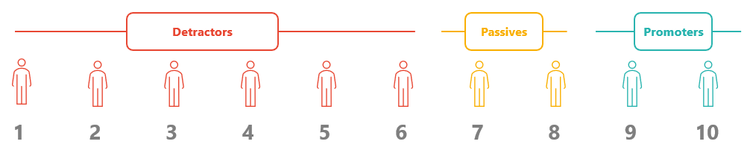
GPE reported a portfolio Net Promoter Score of +26.1 for the year ended March 2025, compared with an industry average of +13.6. Its Fully Managed spaces achieved +48.3, alongside customer retention of 91% at lease break or expiry. In its subsequent survey, GPE reported an overall NPS of +29.7 and a 58% response rate. It also reported using feedback from the previous year to target improvements in its retail portfolio. (GPE Annual Report 2025; GPE customer-satisfaction results)
The strength of this approach does not lie in NPS alone. No single measure is sufficient. It lies in independent collection, comparison with peers, organisational visibility and evidence that feedback leads to action.
GPE’s approach has also received external recognition. Its Woolyard development won the British Council for Offices’ 2025 Customer Experience Award for commercial landlords. The judges highlighted the customer-facing role of building managers and the direct connection between customer-experience leaders and the chief executive.
When the measure becomes the mission
The danger begins when achieving the score becomes more important than learning the truth.
A satisfaction score is intended to represent the quality of the customer’s experience. Once careers, bonuses or contracts depend on it, however, people may find it easier to manage the score than improve the service.
I have experienced this personally.
At one car dealership, a salesperson offered to arrange a loan car if I gave him a five-star rating. The proposed exchange was clear: a benefit for me in return for a favourable score for him.
In another case, the employee of an electrical-appliance company told me that he was paid a £3 bonus for each item of positive customer feedback he received. A fair reward possibly, but delivery staff are given a script of what to say before leaving the customer’s home. Its intention to make customers feel duty bound to give positive feedback.
These arrangements may raise reported satisfaction, but they do not necessarily improve the experience. Worse, they contaminate the information. Management may celebrate a rising score while becoming less able to distinguish excellent service from influenced feedback.
This is the paradox of a corrupted metric: the number rises as its usefulness falls.

image courtesy of:https://www.pinterest.com/innersparkpins/
How feedback is influenced
Manipulation is not always as explicit as exchanging a loan car for five stars. It can be embedded subtly in the survey process.
Frontline employees or suppliers may:
• Tell customers that anything below the highest rating counts as failure.
• Explain that their pay, appraisal or employment depends on the response.
• Ask for praise while the customer still feels indebted to them.
• Stand over a customer completing a feedback form or online survey.
• Survey only customers expected to respond positively.
• Avoid inviting customers who have made complaints.
• Repeatedly pursue happy customers while “losing” dissatisfied ones.
• Phrase questions to produce agreement.
• Report only headline scores while withholding critical comments.
• Combine non-comparable customer groups to conceal weak performance.
Leadership cannot dismiss this as isolated frontline misconduct if it has created the pressure that causes it. When leaders demand an unrealistically high score, reward it mechanically and show little interest in how it was obtained, they invite people to game the system.

image courtesy of: https://www.pinterest.com/merrill_design/
Should managing agents and suppliers survey themselves?
Property owners commonly ask third-party managing agents, facilities-management firms, cleaning contractors or security providers to measure customer satisfaction. There is nothing wrong with suppliers collecting day-to-day operational feedback. It can help them resolve problems quickly.
The difficulty arises when a supplier’s self-administered survey becomes the evidence used to determine its performance rating, bonus or contract renewal.
That is effectively asking the supplier to mark its own homework.
The supplier may control:
• Which occupiers are approached.
• When they are contacted.
• Which questions are asked.
• How often reminders are sent.
• Whether employees are present.
• How results are categorised.
• Which comments reach the landlord.
• How exclusions and incomplete responses are treated.
Even an honest supplier faces a conflict of interest. Employees know that poor results may damage their appraisal or contract. Respondents may also hold back if they believe their comments will go directly to the team on which they depend for access, maintenance or other essential services.
Self-surveys can therefore remain useful as operational listening tools, but they should not be the sole or controlling evidence in formal performance reviews.
The property owner or asset manager should retain ownership of the Voice of the Customer programme. Respondents should be selected from an agreed source population, contacted independently and given a confidential route for responding. Results should be reported both to the owner and the supplier, with transparent rules governing sample selection, exclusions and attribution.
Most importantly, customer feedback should evaluate the whole experience while still identifying the contribution of individual parties. Customers do not experience the landlord, managing agent, FM contractor and security provider as separate contractual structures. They experience one building.
A good measurement programme therefore needs to reveal both the end-to-end experience and where responsibility for problems lies.
… and don’t fall foul of the law
UK Competition and Markets Authority guidance now treats concealed incentivised reviews as a banned practice. It also warns businesses against interfering with customers’ ability or willingness to leave negative feedback. (CMA guidance on reviews and endorsements)
Having written more than 1,000 Tripadvisor reviews, I now rely less on any single review site. I increasingly use AI to identify themes across several sources. That can broaden the evidence base, but AI does not make unreliable source material reliable. Triangulation, provenance and human judgement still matter.
How RealService can protect the integrity of the process
An independent research provider, like RealService, should do more than distribute a questionnaire. Our role should be to protect the validity of the evidence and help the organisation act on it.
RealService can support this in several connected ways.
1. Separate service delivery from measurement
RealService sits outside the landlord’s management, agency and FM delivery structures. That separation gives occupiers and residents a channel in which they may feel more comfortable raising concerns.
It also prevents the team being assessed from controlling respondent selection, survey timing or the presentation of results.
2. Establish a defensible sample
A credible programme begins with a defined customer population and agreed selection rules. Response rates should be recorded and analysed, not treated as a footnote.
Results can then be checked for:
• Missing customer groups.
• Unusual clusters of perfect scores.
• Differences between email, telephone and face-to-face responses.
• Low participation at particular buildings.
• Results that vary sharply depending on the supplier involved.
• Evidence that dissatisfied customers are being excluded.
3. Combine numbers with human conversations
A headline NPS or satisfaction score identifies that a problem may exist; it rarely explains why.
RealService uses interviews, surveys, journey mapping and other forms of customer research to reveal the reasons behind the number. Our research is conducted by in-house consultants familiar with property and the relationships between owners, occupiers, managing agents and suppliers.
4. Benchmark like with like
The RealService Customer Experience Index draws on more than 60,000 interviews with senior real-estate stakeholders. It allows clients to compare performance with relevant peers and across their own portfolios.
Benchmarking reduces the temptation to declare success merely because a score has risen. It asks the more demanding question: Is the organisation improving relative to comparable properties and customer expectations?
5. Create supplier accountability without supplier self-certification
An independent programme can produce performance evidence for managing agents and FM providers without allowing them to control the process.
The owner can use independently collected feedback as one component of a balanced supplier scorecard alongside service-level data, complaint resolution, safety performance, audit findings and qualitative evidence. Suppliers should see the findings, be able to correct factual errors and participate in action planning—but they should not choose the respondents or edit the results.
6. Test the lived experience
Mystery shopping and building clinics can reveal what customers actually encounter during letting enquiries, arrival, reception, maintenance reporting and other important moments. RealService’s approach examines the customer journey against a structured property-specific checklist and turns the findings into improvement plans.
This provides a valuable cross-check. If survey scores are exceptional but mystery shopping finds repeated service failures, leaders should investigate the discrepancy.
7. Train teams to improve the experience ethically
Insight is useful only when it changes behaviour. Training can help landlord teams and service partners improve listening, communication, complaint handling and collaboration.
Crucially, training should also establish what employees must not do: coach a respondent, request a particular score, hover while a survey is completed or imply that their income depends on the answer.
8. Close the feedback loop
Customers should be told what changed because they spoke up. Action plans, named owners, deadlines and follow-up pulse surveys turn measurement into improvement.
This is where incentives can work positively. Leaders and teams can be assessed not only on the score, but also on whether they addressed recurring problems, closed actions and demonstrated sustained progress.
Measure to learn, not merely to reward
Customer-experience targets are powerful because incentives shape attention and behaviour. Used well, they can unite property owners, leaders, employees, managing agents and FM partners around something every healthy real-estate business needs: customers who choose to stay, renew and recommend.
Used badly, the same targets create pressure, distortion and false confidence.
The answer is not to abandon measurement or incentives. It is to design them with integrity. Separate measurement from service delivery. Combine quantitative scores with qualitative evidence. Protect customers from pressure. Benchmark results intelligently. Hold suppliers accountable without allowing them to assess themselves. Reward action and improvement, not just a number.
Above all, make leaders responsible for the integrity of the process.
A customer metric should be a window into the customer’s world—not a mirror in which the organisation admires itself.
RealService can help you design a new feedback programme or critique the value of your current programme.
Contact Us

Article by Howard Morgan
Senior Advisor
