
Just because we can, doesn't mean we should - CX principles for deploying AI in residential real estate
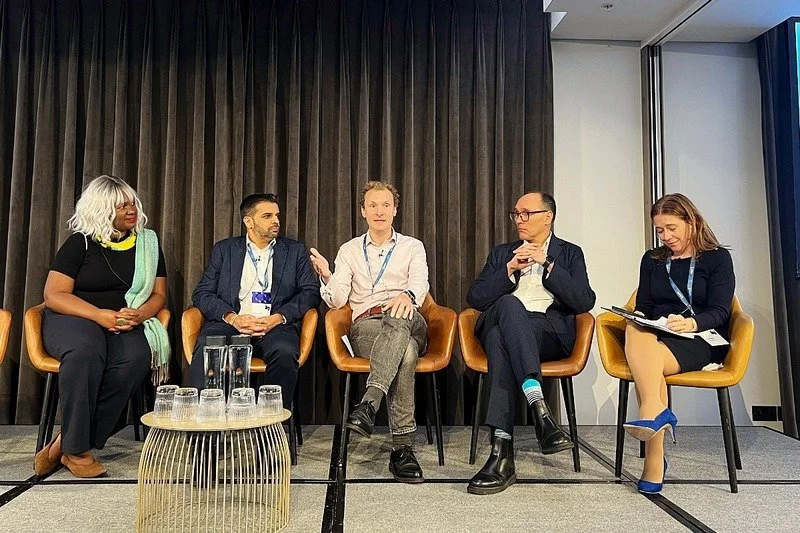
CREDIT: Inside Housing (Eliza Parr)
I want to start by saying that I'm someone who can get very excited about AI. I was an early adopter, in every sense.
But some of the use cases I've seen emerging have had me seriously raising my eyebrows. Yes, AI could improve resident experiences, but it also has the potential to completely destroy trust and reputation if it isn't deployed in a really considered way.
Residential real estate especially is uniquely sensitive - we're talking about people's homes which comes with a whole host of legal, regulatory and ethical responsibilities.
Leaders in residential real estate need to be very clear about where they draw that line. What are the situations where, regardless of how sophisticated the technology becomes, a human being must remain accountable? There are situations that require a human face. Human accountability. A human head to roll when everything goes pear-shaped.
What are the situations we can collectively agree will always need a human being, and not a chatbot politely informing them that their enquiry has been logged or flinging half-baked hallucinations your way.
This was the main thread of what I said yesterday when I spoke at The Housing Forum National Conference, on a panel about the future of AI in housing, alongside Guy Marshall PhD Vijay Patel and Damian Wild chaired by the ever fabulous Alexandra Notay, Hon MRTPI.
I was asked how can housing organisations can use AI to improve resident experience while maintaining the human connection residents value. Here's my take on the opportunites and risks.

1 - Do use AI to offer faster response times and round-the-clock service....
A Head of Technology at a landed estate recently told me about how they've introduced AI telephony, allowing them to answer calls 24/7 and respond immediately to enquiries that don't necessarily need a human being.
Why should a resident have to wait until Monday morning to get an answer to a straightforward question they asked on Friday evening? If AI can do it, that's a genuine improvement in customer experience.
2....but don't assume AI understands people better than it actually does.
I came across a fascinating example from a Housing Association in Bradford. They introduced a new AI-enabled telephone system that included sentiment analysis, technology designed to work out how callers were feeling based on their language and tone.
Except there was a problem. The system was hosted in Canada and struggled with British regional accents and multilingual callers. It was interpreting people's emotions incorrectly. Imagine being perfectly happy and having a machine decide you're furious because it doesn't understand your accent. To their credit, they recognised the problem and started checking the AI's assessments against actual call recordings and staff feedback.
3.... and don't make it impossible to speak to an actual human being.
In our analysis of the RealService Customer Experience Index we did earlier this year, one of the most negative themes was an over-reliance on automated and transactional communication, particularly in sensitive situations. Read full report here.
Citizens Advice has reported that among people who struggled to reach a human about an essential-service problem, 44% experienced delays and 14% gave up trying to resolve it. "As essential services move to digital-first or online-only access, people are being locked out of critical services and support". They highlighted issues such as two tier support with lower service for digitally excluded people, and generally poorly designed digital services.
4 - Do use the time you save using AI to actually spend more time with people...
Residential property managers spend so much time on administrative niff naff that could be automated.
If we save a housing officer 8 hours a week, give them more time to visit residents, resolve difficult problems and build relationships.
5...but don't confuse efficiency with a better customer experience.
Imagine a housing association proudly announcing that its shiny new AI chatbot handles 80% of resident enquiries without human intervention. Fantastic - but what does handled actually mean?
Did it solve the problem? Or did the resident get so fed up that they gave up? We should be careful about confusing a reduction in contact with a reduction in problems.
6... but don't lose control of your resident experience to technology suppliers.
There's a fascinating dispute unfolding in the US between RealPage and EliseAI, two property technology providers, over access and permissions for an AI agent. RealPage paused new integrations, while existing ones reportedly continued operating. EliseAI disputes RealPage's allegations.
Imagine investing in a new AI solution, training your staff, building your processes around it, and then discovering that two suppliers have fallen out and suddenly you can't deploy it in your next building. You can outsource technology, but you can't outsource responsibility for the resident experience.
7. Do use AI to analyse what residents are telling you at scale and in real time...
This is obviously something I'm particularly excited about, given what we do at RealService.
Traditionally, analysing thousands of pieces of qualitative customer feedback took ages, it needed whole departments. We can now use AI to bring together and analyse data from chatbot conversations, resident phone calls and satisfaction surveys, spotting patterns that would previously have taken teams of people days to identify. If you're curious about our CX platform check out Quest.
8...but don't blindly trust decisions made by algorithms you don't fully understand.
You can't outsource decisions to models you don't understand. I mean, I don't even think the techbros fully understand the models either.
A Housing LIN report described a housing association whose predictive rent-management AI pilot was unsuccessful because the underlying data wasn't sufficiently reliable. And that's before we even get into algorithmic bias.
If an AI system is deciding which residents are at risk of rent arrears, who needs intervention or which cases deserve priority, what information is it basing those decisions on? Could it be systematically disadvantaging certain groups of residents?
9...and don't use AI to make bad decisions faster.
We already have algorithms being used to predict which tenants might fall into rent arrears and others being used to score prospective tenants on whether they should be offered a home. Using an algorithm to decide whether someone should have access to a home? That's where I start to get very uncomfortable.
My overarching principle when it comes to AI is this:
Just because we can, doesn't mean we should.
All leaders in residential real estate need to develop an experience philosophy that specifically tackles AI usage. Literally sit down and decide, based on your values and the trade-offs in front of you, what you will and won't outsource to technology.
Even if a perfectly functional solution exists.
And I don't think it's always black and white. 12 months from now someone could walk into your office and pitch you an automation you never dreamed possible.
Now is the time to have those discussions.
For more insights like this, follow me Chenai Gondo, PhD
