
What Target's 10-4 Customer Service Experiment Can Teach Real Estate About CX - By Chenai Gondo
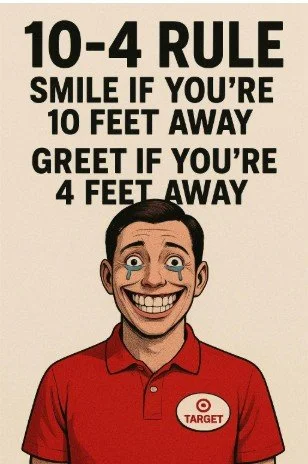
CREDIT: REDDIT
This weekend I read an article in The Economist about how Target, one of America’s biggest retail chains, with nearly 2,000 stores, has introduced a new customer-interaction guideline called “10-4.” The rule is simple:
When a customer is within 10 feet, staff should smile, make eye contact, wave, and use welcoming body language.
At 4 feet, they should offer a personal greeting and initiate a helpful interaction.
When the article came out, the internet immediately did what the internet does: it laughed. “Do we really need formal instructions on how to smile?” “What happens if someone hovers at 5 feet?” “Are staff meant to wave through glass?”
The memes are funny. Reddit did not disappoint. But, don't be so distracted by the joke that you fail to look deeper. Because behind this seemingly over-engineered rule lies something real estate has never fully embraced: the idea that customer experience can, and should, be intentionally designed.
Why Rules Like 10-4 Exist - And Why They’re Not as Silly as They Look
If you read The Economist piece carefully, the humour is only the entry point. The logic quickly becomes clear:
Poor service costs money.
Inconsistent service erodes trust.
And most customers prefer slightly scripted friendliness to genuine indifference.
Target isn’t alone, either. Walmart has a similar ten-foot rule. Hotels have long used the 15-5 rule: smile at fifteen feet, greet at five. Some hospitality brands refer to the “zone of hospitality,” where crossing an invisible threshold triggers an interaction.
These rules aren’t about treating employees like robots. They’re about removing ambiguity.
Without guidance, some customers feel ignored, others feel smothered, and staff spend their whole shift guessing.
Codified micro-behaviours create a baseline: not perfection, but consistency.
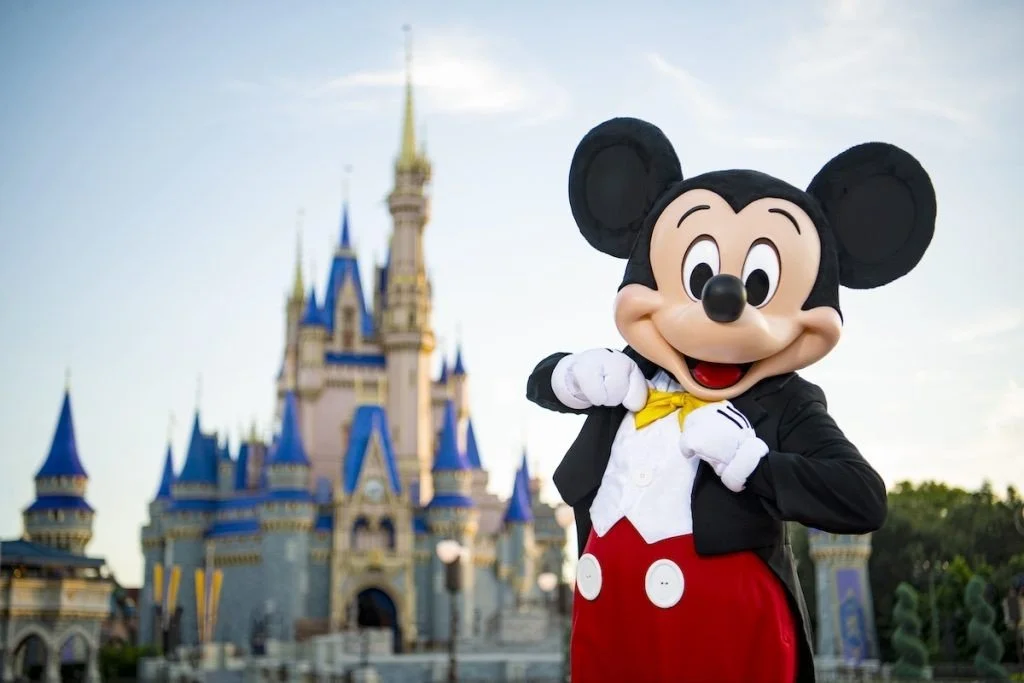
And Then There’s Disney, the Gold Standard of Engineered CX
I once worked with someone who began his career at Disney, and he told me Disney shaped everything he knows about customer experience. At the time, I wondered how true that could be. Now I understand exactly what he meant.
Disney is in a category of its own.
Some families save for a decade to afford a single Disney holiday. The emotional stakes are extraordinarily high. Every smile, every gesture, every interaction matters. You don’t “just work there”; you create moments people have waited years for.
Disney trains for that. Relentlessly. Eye contact, warmth, energy, anticipation of needs - these are not left to chance. They are drilled, rehearsed, and continuously refined.
When you see 10-4 through this lens, it stops looking ridiculous and starts looking familiar. Target is not inventing anything. They are borrowing from the world’s most CX-mature sectors.
CREDIT: Disney Experiences
And This Is Where Real Estate Needs to Pay Attention
In real estate, customer experience is still in its adolescence. Historically, the industry has focused on:
the asset,
the lease,
the transaction,
the operational checklist.
The human experience inside the building was often an afterthought. To this day, many occupiers couldn’t name their property manager. And if they can, consistency in service is far from guaranteed.
Where hospitality and retail use structured behavioural frameworks, real estate often relies on personality and luck.
Does the receptionist feel confident today?
Does the building manager happen to be naturally warm?
Is the contractor having a good morning?
That’s not a system. That’s a gamble.
The Real Lesson of 10-4 Isn’t the Rule, It’s the Mindset Behind It
The Economist highlights the tension: too much scripting feels robotic; too little structure leaves customers feeling ignored. Retail and hospitality manage that balancing act every day. Real estate rarely attempts it.
The question isn’t:
“Should real estate copy 10-4?” Of course not.
The question is:
“Why has real estate never created its own approach to engineered customer experience?”
Retail tests frameworks like 10-4. Hotels obsess over service rituals. Disney builds entire philosophies around guest interaction.
Real estate often still hopes for the best.
Three Lessons Real Estate Should Borrow
1. Clarity beats improvisation.
Guidance empowers staff and removes awkwardness. “Be friendly” is not a standard. It’s a wish.
2. Emotional stakes exist in real estate too.
Think of residents returning home, visitors navigating a lobby, tenants dealing with a repair. These moments shape trust, and yet they’re rarely designed with intention.
3. Consistency builds credibility.
Industries with strong CX cultures deliver predictable service. That’s why customers trust them. Real estate must evolve beyond personality-driven delivery.
So Will 10-4 Work? Maybe. Maybe Not. But That’s Not the Point.
10-4 may evolve, soften, or disappear. It may land brilliantly or fall flat.
But the willingness to try - to design, test, refine, and operationalise customer experience, is exactly what sets retail and hospitality apart.
Real estate doesn’t need a proximity rule. But it does need the same mindset:
The best customer experiences don’t happen by accident. They happen by design.
And it’s long overdue for our industry to catch up.
If you're embarking on a customer experience journey in your real estate portfolio - lets talk. At RealService, that's just what we do.
For more insights like this, follow me Chenai Gondo
