
The Strange Case of the Hotel Employee Who Didn't Exist.
Lately it seems like my Instagram feed is an endless stream of creepy humanoid robots - and the accompanying collective disgust and outrage that such things could exist.
A few days ago, I watched a viral video on instagram of an influencer calling a major hotel chain's customer service line.
At first, it seemed pretty ordinary - the friendly woman on the phone had a convincing southern black american accent.
Except something felt off.
The influencer began asking relatively straightforward questions about the hotel pool, but noticed that the answers were weirdly vague. The voice sounded human, but the conversation felt hollow. Whenever she pushed for specifics, the answers became evasive. Eventually she asked the question many of us would ask in the same situation:
"Are you a real person?"
The jolly customer lady did all kinds of somersaults to avoid answering directly with a yes or no. Instead she said she was a "real authorised booking agent" for the hotel chain.
The customer asked again and there was just more avoidance.
The customer tried asking things like her favorite color - she had one, let's say it was orange.
Surely that meant she was a human.
Eventually, the truth emerged. The "person" on the other end of the line wasn't a person at all. It was an AI-powered virtual agent.
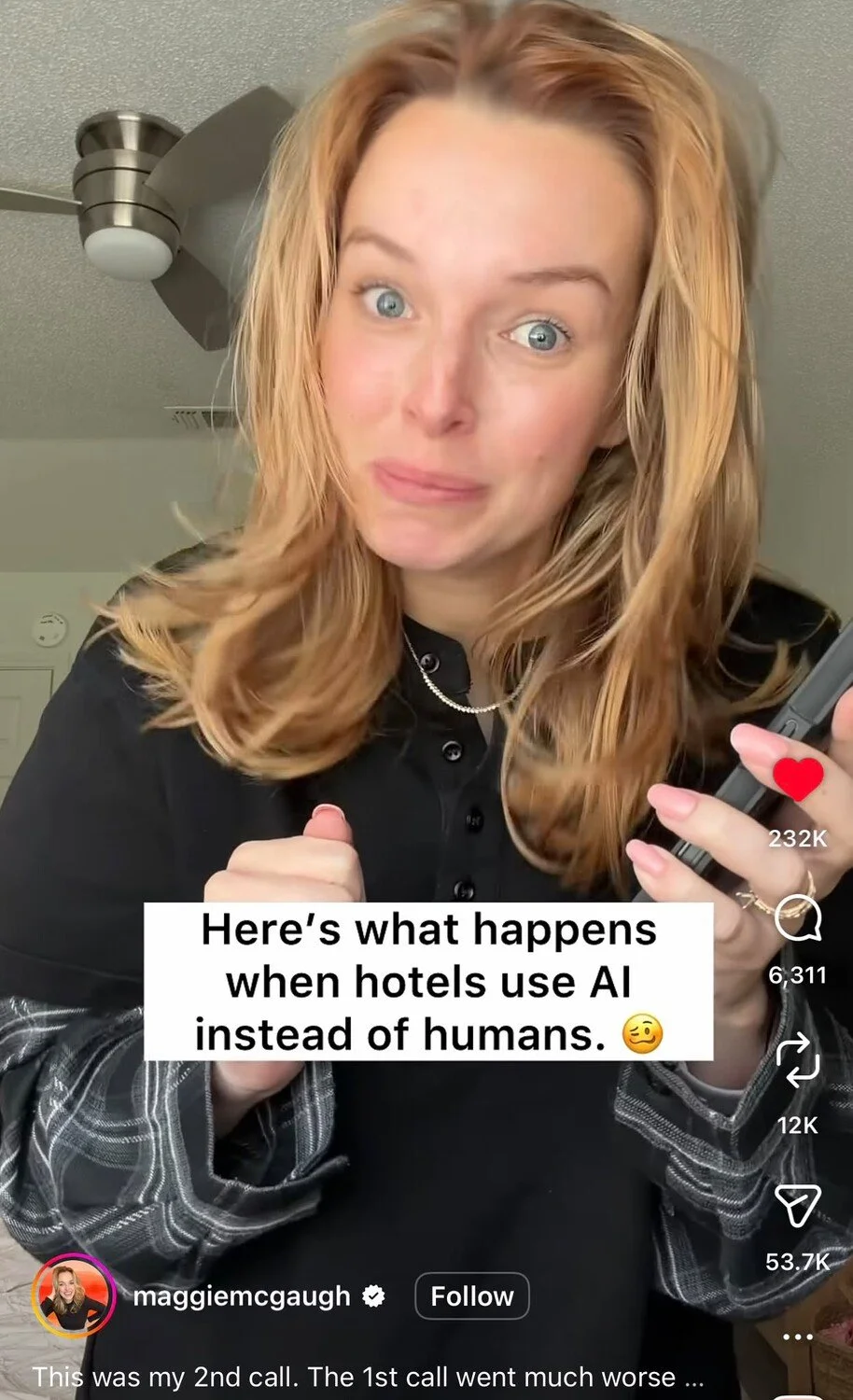
The reaction from the public was brutal.
There were two things going on
First of all, a lot of people felt like it was a form of deception - almost like any AI needs to declare upfront that they aren't human, and not obfuscate when asked directly.
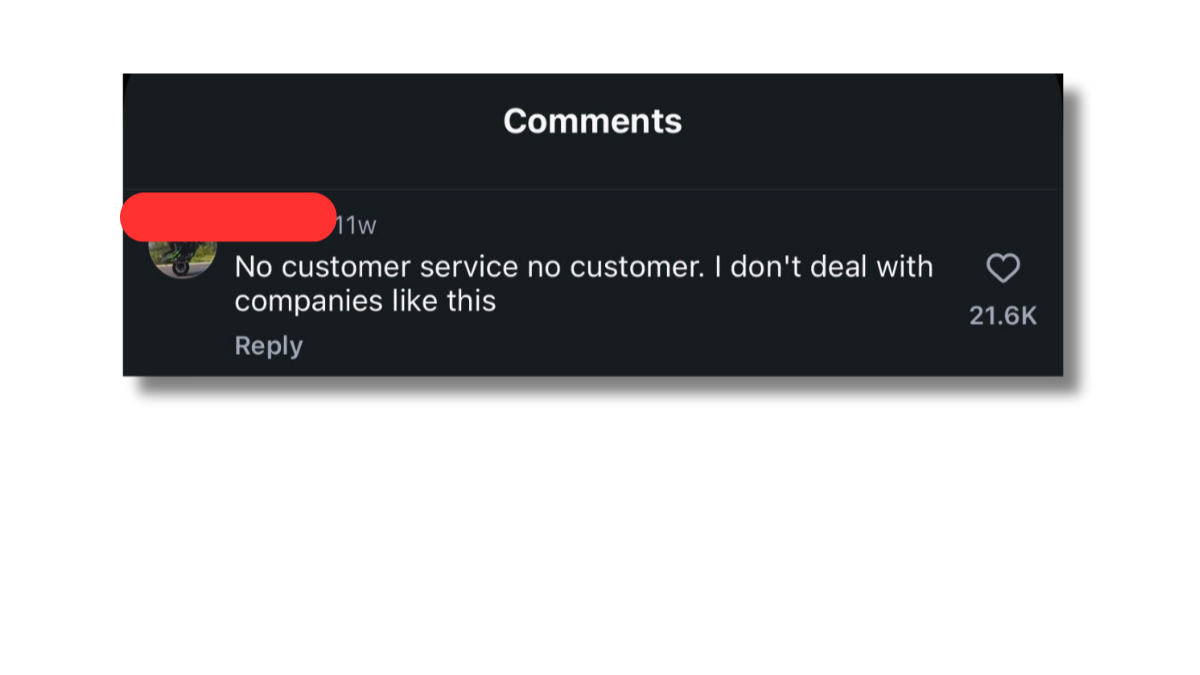
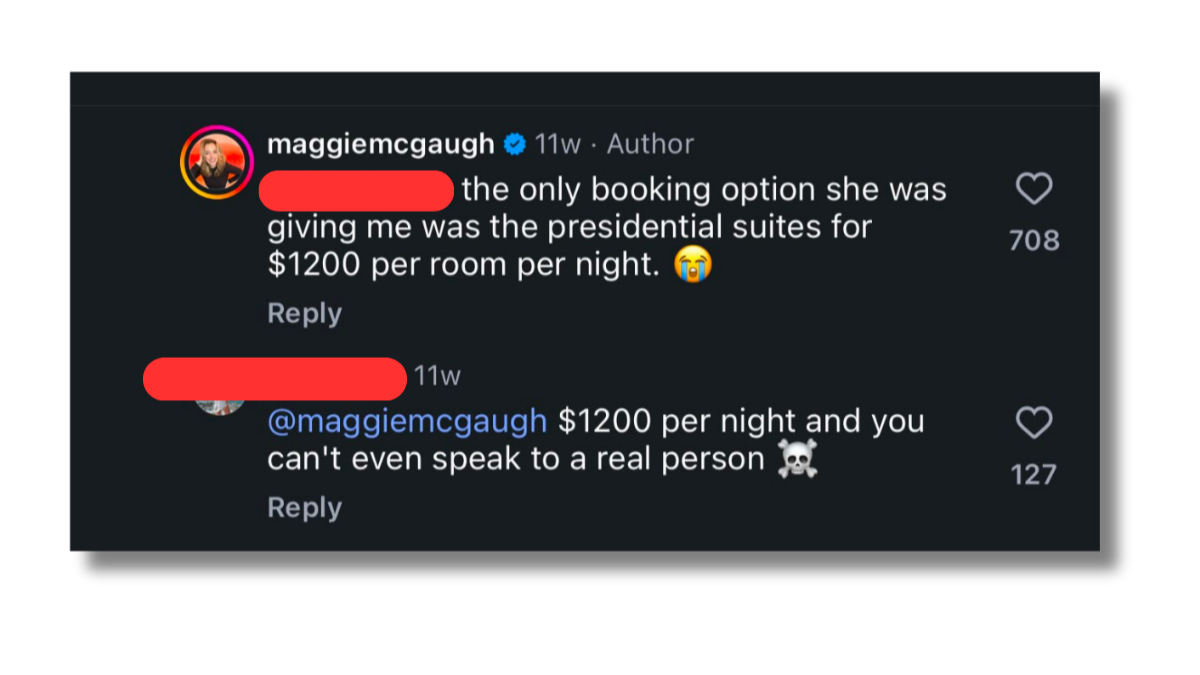
The second - and probably a more important criticism, was some version of this: if a hotel can't even provide human customer service, why should I stay there?
It's really bad publicity for the hotel chain. The post has been viewed 3.5 million times, liked by 232k people, and been re-shared 66k times.
It's yet another example of an organisation trying to cut corners on their customer experience and then appearing genuinely surprised when customers object.
Some innovations will fail they miss the mark on customer experience.
I often talk in my lectures about the disruption spectrum. At one far end is the innovation graveyard - products and inventions that were super hyped to change the world and then... pretty much failed. I used examples like:
2001: The Segway was supposed to revolutionise transport, but who wants to lug that heavy thing up the tube stairs?
2009: 3D televisions were supposed to become standard in every home, but we all hated those glasses, especially if you already wore prescription glasses
2020: Mark Zuckerberg spent billions of dollars betting that we would all want to spend large portions of our lives socialising in the metaverse. We all know how that went.
The metaverse is perhaps the clearest example.
Even during COVID, when many of us were stuck at homes, we weren't dreaming about spending more time in virtual spaces with headsets on. We were dreaming about dancing in the actual sun at music festivals, hugging our friends in person, eating in actual restaurants, kicking a real ball on a field of real grass.
These technologies didn't fail because they didn't work. In many cases, the technology itself was impressive. They failed because people looked at the proposition and decided they preferred existing alternatives.
Which makes me wonder whether some AI applications may face a similar challenge. Not because they don't work, but because people may ultimately decide that certain human interactions are worth preserving.
Every real estate organisation introducing AI into their customer journey is effectively making a bet.
The bet is that customers will either prefer the new experience or, at the very least, not care enough to leave.
Some of those bets will prove correct and others may not. The reaction to that hotel call suggests that many consumers place a higher value on human customer service than many companies realise.
The question, then, is not whether AI can replace a person. In many situations, it clearly can. The more important question is whether customers actually want it to.
The companies that succeed will be the ones that understand where technology adds value, where human interaction still matters, and how to strike the right balance between the two.
Because customer experience - more often than not - is about people.
We recently explored this and other themes in our white paper on the State of Customer Experience in Real Estate. If you haven't read it yet - check it out on our website.

As always, for more insights like this follow me Chenai Gondo, PhD
About RealService
RealService is a specialist customer experience consultancy for the built environment. We work with real estate owners, developers, and operators to understand and improve how their assets perform in practice. RealService currently maintains the RealService Customer Experience Index - the only independent cross-sector CX benchmark for European real estate, It is built from more than 60,000 customer interviews conducted across office, retail, industrial, mixed-use and residential assets over the past 27 years. To learn more visit: https://www.real-service.com/
Topics covered in this article:
Customer Experience in Real Estate, Real Estate Customer Insight, Occupier Insight, Ocupier Experience, Tenant Experience,Human-Centred Design, AI in Real Estate Customer Service, Real Estate Virtual Agents and Chatbots, Automation and Society, Technology Adoption, The Human Impact of AI, The Value of Human Connection, Consumer Behaviour, Real Estate Customer Expectations, The Future of Customer Experience, Human Relationships in a Digital World
